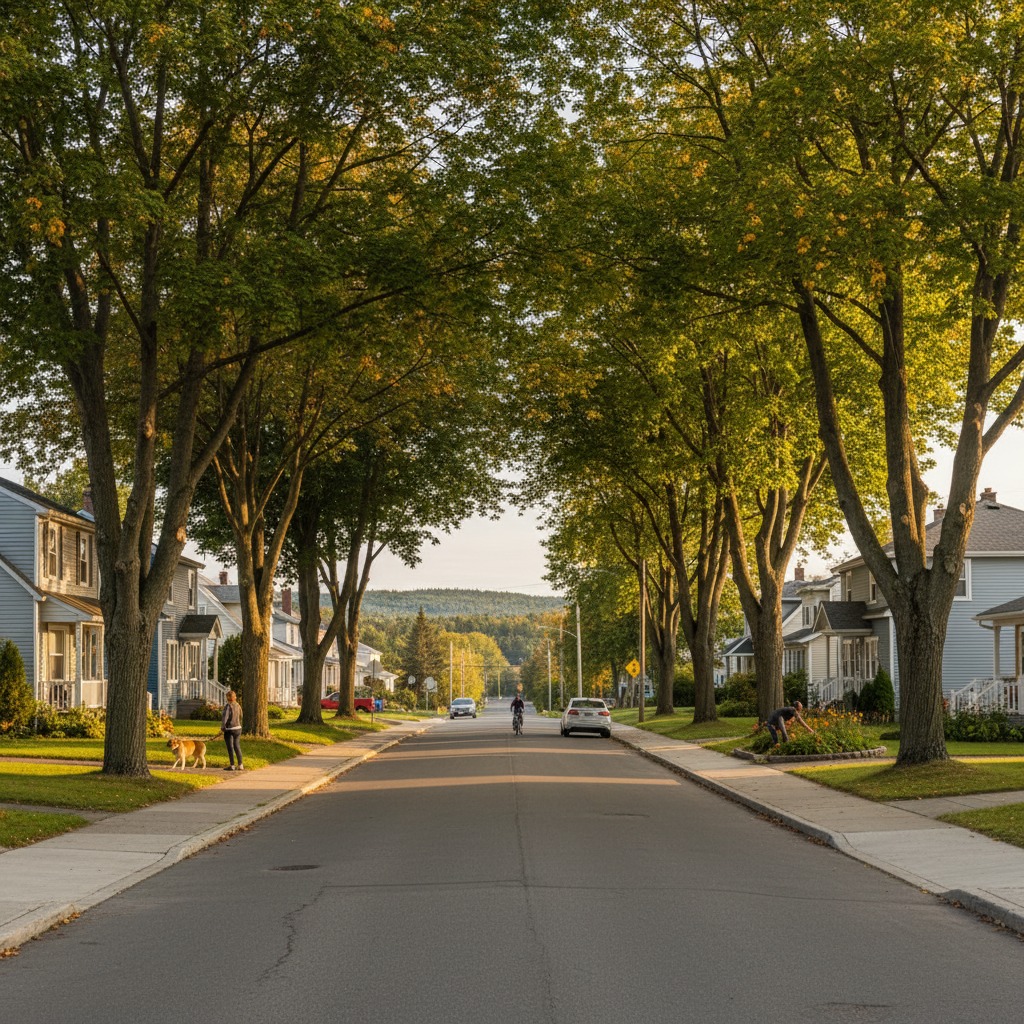
How does Halifax's newest planned community compare to established HRM suburbs?
Comparing Port Wallace to Other HRM Communities
Choosing where to live in the Halifax Regional Municipality means weighing many factors: commute times, housing costs, neighbourhood character, access to nature, and more. Port Wallace is a fundamentally different proposition from most HRM suburbs because it is being built from the ground up as a complete, master-planned community. Here is how it stacks up against some of the most popular alternatives.
| Factor | Port Wallace | Clayton Park / Clayton Park West | Bedford | Cole Harbour | Fall River | Portland Hills / Woodlawn |
|---|---|---|---|---|---|---|
| Distance to Downtown Halifax | 15–20 km | 8–10 km | 15–20 km | 15–18 km | 25–30 km | 10–15 km |
| Housing Type | Mix of single-family, townhomes, apartments (4,900 units planned) | Mostly apartments and condos; some single-family | Mix of single-family, townhomes, and newer condo developments | Mostly single-family homes | Single-family on larger lots | Mostly single-family; some townhomes near Portland Street |
| Price Range | Moderate (new-build pricing, growth area) | Moderate to expensive (high demand, central location) | Expensive (established, desirable waterfront area) | Moderate | Moderate (lower land costs offset by larger lot sizes) | Moderate |
| Transit Access | Route 55; future service planned as community grows | Excellent — multiple bus routes, near transit terminal | Good — Bedford Highway routes, Highway 102 express | Good — several routes to downtown and Dartmouth | Limited — minimal transit service | Good — multiple Dartmouth routes |
| Amenities & Shopping | Planned commercial village centre; currently limited | Bayers Lake shopping, Mumford Terminal area, many retail options | Bedford Commons, Larry Chicken retail district, Sunnyside Mall | Cole Harbour shopping centres, Forest Hills retail | Limited local retail; residents drive to Dartmouth or Bedford | Portland Street corridor, Mic Mac Mall, Penhorn Mall area |
| Schools | New school facilities planned as part of development | Established schools (Park West, Fairview Junior High, etc.) | Well-regarded schools (Bedford South, Charles P. Allen High) | Strong school options (Cole Harbour High, Auburn High, Colby Village Elementary) | Fall River schools; some students bus to Dartmouth/Sackville | Good schools (Woodlawn, Portland Estates, Caledonia Junior High) |
| Character | Brand-new master-planned community | Established, dense urban-suburban | Established with newer pockets of development | Established suburban, family-oriented | Rural/exurban, low density | Established suburban, well-maintained |
| Natural Features | Lake MicMac, Lake Charles, Shubie Park, lakeside setting | Limited — some green spaces, Chain of Lakes Trail nearby | Bedford Basin waterfront, Hemlock Ravine Park | Cole Harbour Heritage Park, Salt Marsh Trail | Lake access, rural forests, provincial parks nearby | Lake Banook/Lake MicMac access, Shubie Park nearby |
A Closer Look at Each Area
Clayton Park / Clayton Park West
Clayton Park is one of Halifax's most established west-end suburbs and offers some of the best transit access outside the urban core. The area is heavily built out, with a high concentration of apartment buildings and condominiums, particularly along Lacewood Drive and Dunbrack Street. Residents benefit from proximity to Bayers Lake Business Park for shopping and easy access to multiple bus routes. However, the density and lack of significant green space may not appeal to those seeking a more nature-oriented lifestyle. New-build options are limited since the area is largely developed.
Bedford
Bedford sits north of Halifax along the scenic Bedford Basin and has long been one of HRM's most desirable suburbs. The area offers a mix of established neighbourhoods and newer subdivisions, with strong schools and a good retail base centred around the Larry Chicken retail district and Bedford Commons. Access to Highway 102 makes commuting straightforward, though the Bedford Highway can be congested during peak hours. Bedford tends to carry a price premium compared to Dartmouth-side suburbs, reflecting its proximity to both Halifax and the Basin waterfront.
Cole Harbour
Cole Harbour is an established, family-friendly suburb in southeast Dartmouth known for its strong schools and relatively affordable single-family housing. The area is home to Cole Harbour Heritage Park, a significant green space, and is well connected by bus routes to both Dartmouth and Halifax. As a mature suburb, it offers the stability of an established community, but most housing stock dates from the 1970s through 1990s. New construction is limited.
Fall River
Fall River appeals to buyers who want larger lots, a more rural feel, and lower land costs. Located north of Dartmouth with direct access to Highway 102, it is growing steadily but remains a car-dependent community with minimal transit service. The distance to downtown Halifax (25–30 km) is significant, and residents rely on driving for most errands and commuting. For those who work remotely or prioritise space and quiet over walkability, Fall River is a strong option.
Portland Hills / Woodlawn
These established Dartmouth suburbs are the closest comparison points to Port Wallace geographically. They offer good schools, reasonable proximity to downtown (10–15 km), and access to Portland Street's retail corridor and Mic Mac Mall. Housing is predominantly single-family, and the neighbourhoods are well-maintained and mature. Like Cole Harbour, new construction is limited, so buyers are typically purchasing existing homes rather than building new.
Why Choose Port Wallace?
Port Wallace offers something that none of the established suburbs above can match: the opportunity to move into a brand-new, purpose-built community designed from the ground up for modern living. Here are the key advantages:
- Brand-new construction — Every home, street, and piece of infrastructure is new. No aging pipes, no outdated wiring, no deferred maintenance. Modern building codes mean better energy efficiency and lower utility costs.
- Lakeside setting with exceptional park access — Port Wallace is bordered by Lake MicMac and Lake Charles, with direct access to Shubie Park, one of HRM's finest trail networks. Few suburban communities in Halifax can match this combination of water and green space.
- Designed as a complete community — Unlike suburbs that grew incrementally over decades, Port Wallace is master-planned to include a village centre with commercial space, schools, parks, and a connected trail network from the outset. The goal is a walkable, mixed-use community rather than a bedroom suburb.
- More accessible entry point — New developments in growth areas typically offer more competitive pricing than established, high-demand suburbs like Bedford or Clayton Park. Buyers can get new construction at price points that would only buy older stock in many other HRM neighbourhoods.
- A community growing together — Moving into a new development means joining a community of neighbours who are all settling in at the same time. There is a unique sense of shared investment in making the neighbourhood a great place to live.
Of course, no community is perfect for everyone. Port Wallace is still in its early stages, which means some amenities and services will take time to arrive. Transit service will grow as the population does, and the commercial village centre will be built as the community reaches critical mass. For buyers who want everything in place today, an established suburb may be a better fit. But for those who want to be part of something new — and who value nature, modern construction, and thoughtful planning — Port Wallace is a compelling choice.
Learn More
- Housing & Real Estate in Port Wallace — detailed information on what is being built and pricing expectations
- Commuting & Transit — how to get to and from Port Wallace by car, bus, and active transportation
- Nearby Neighbourhoods — explore the communities surrounding Port Wallace
- Parks & Trails — Shubie Park, lakeside trails, and the natural environment around Port Wallace